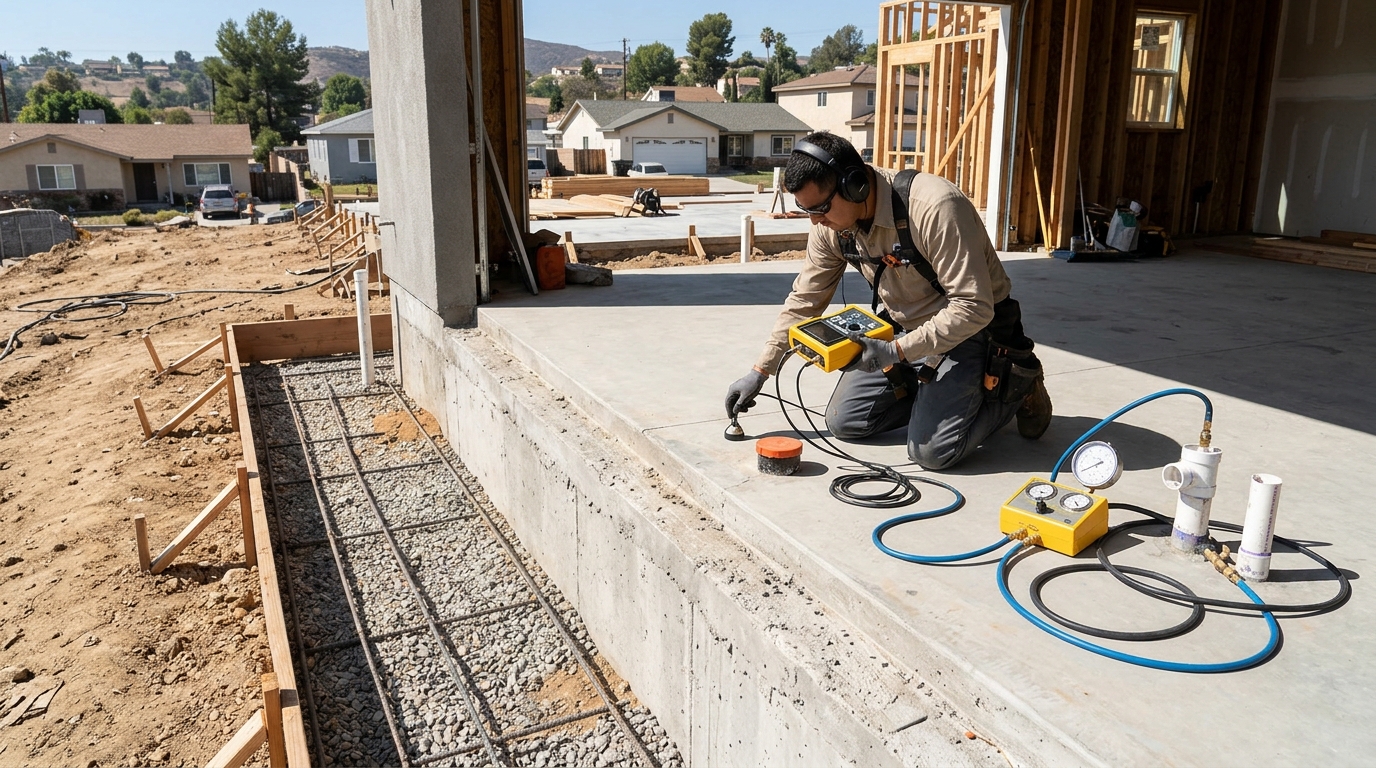
Understanding Foundation Plumbing Failures in Plantation Homes
Throughout Plantation, Florida, residential properties built from the 1950s onward rest primarily on monolithic concrete slab foundations. Beneath these dense structural slabs lie pressurized water supply lines and gravity drainage networks. Over decades of service, changing soil conditions, shifting moisture levels, and mineral interaction gradually wear through buried piping. When you require professional slab leak repair Plantation FL property owners can count on, understanding why these breaks occur helps you make durable repair decisions.
The geological foundation of Broward County combines sandy soil layered over permeable limestone, paired with an unusually shallow water table. As seasonal rains saturate the sub-base, soil shifts slightly against copper lines embedded directly in rough concrete or buried in sand. Copper pipes that supply domestic water expand and contract with hot and cold temperature cycles, creating friction wear points where the pipe contacts gravel or rebar. Eventually, a pinhole failure develops, allowing pressurized water to pool under the foundation.
When a leak begins beneath the concrete, water seeks any path of least resistance. It may travel across grade beams, saturate sub-base sand, seep up through expansion joints, or soak through perimeter footing zones. Addressing a leak under foundation Plantation residence quickly prevents soil washouts, degraded flooring, mold colonizations, and structural stress cracks.
Warning Signs Checklist: When to Suspect an Under-Slab Leak
Because pressurized supply lines are completely hidden beneath poured concrete and finished flooring, property owners rarely see spraying water at the initial onset of a failure. Instead, subtle environmental and utility cues signal that you need an experienced slab leak plumber Plantation specialist:
- Unexplained Warm Flooring Zones: Walking barefoot across tile, vinyl, or carpet reveals a localized hot spot, indicating a ruptured hot water copper line beneath the concrete.
- Continuous Water Meter Activity: If all plumbing faucets, ice makers, and irrigation zones are shut down inside and outside the home, but the low-flow indicator on the meter continues to spin, pressurized water is escaping.
- Audible Water Movement: A faint sound of hissing, humming, or running water inside interior walls or beneath floors when no fixture is running.
- Drastic Spikes in Water Bills: An unexpected surge on your monthly Plantation municipal water statement without changes in household consumption.
- Damp Floor Coverings and Baseboard Decay: Moisture seeping up through tile grout, warped wood floors, wet carpet padding, or peeling paint along drywall baseboards.
- Hairline Cracks along Tiles and Interior Walls: Soil saturation beneath the slab leads to uneven subgrade settlement, creating visible hairline fractures in rigid ceramic tiles.
- Persistent Musty Odors or Mildew Growth: Excess vapor escaping from beneath the floorboards drives indoor humidity and fosters hidden mildew.
Suspecting an Active Slab Leak in Your Home?
Turn off your main water valve to protect your foundation and contact our diagnostic team immediately.
Immediate Steps: What to Do While Awaiting Service
If you suspect an active under slab break, immediate action limits water loss and prevents flooring damage. Follow these safety protocols before the technician arrives:
- Locate and Shut Off the Main Water Supply: Turn the primary residential gate valve or ball valve clockwise until fully closed. This stops pressurized water from continuing to wash out sand beneath your slab.
- Turn Off Your Water Heater: If the break is on a hot water line, turn off electric breakers or gas controls to the water heater to avoid element dry-firing or excessive thermal stress.
- Photograph Signs of Moisture: Capture clear digital pictures of damp carpeting, warped wood, wet drywall, or spinning water meters for documentation.
- Clear the Immediate Vicinity: Relocate furniture, rugs, and electronic equipment away from damp spots on the floor to prevent secondary mold growth.